Archive for March, 2007

Rakthamoksha Panchakarma

Friday, March 23rd, 2007

Rakthamoksha or blood letting is the last, but most complex form of body purification therapies in Ayurvedic panchakarma. Toxins from the gastro-intestinal track accumulate in the blood and reach every tissue and cell of the body. This toxins cause different problems like infections, skin diseases, and diseases that affect heart, liver, spleen, etc.

Excess pitta can be transferred to raktha (blood). Pitta is originally produced from the red blood cells disintegrated at the liver. Thus pitta and rakta are closely related. Excess pitta converts to toxins of the blood.

Blood letting automatically stops after some time. It is as if the body knows how much blood it needs to throw out to attain swastya or healthy condition.

Conditions like acne, rashes, eczema, chronic itching, enlarged liver or spleen etc are the conditions for which blood letting is advocated.

Persons with anemia, edema, body weakness, etc are not advised to take rakta moksha. Children, elderly people, pregnant woman, etc are also not allowed to take this therapy.

Nasya in Panchakarma

Friday, March 23rd, 2007

Nasya or nasal administration of medicines is an important treatment in panchakarma method of Ayurvedic treatment. According to Ayurveda concepts, nose is the doorway to brain and consciousness.

According to yoga and Ayurveda, Prana, the life force enters our system through our nose. The doshas of the body accumulated in sinus, throat, nose or head can block the movement of prana. Nasya therapy is a method of eliminating the accumulation of such doshas from sensitive areas. Prana is responsible for healthy functioning of nervous system, memory, and intellectual qualities of humans.

Nasya also address problems like sinus congestion, migraine, certain eye and ear problems, etc. Improvement of breathing is another application of nasya.

There are six main types of nasya, they are:

Pradhama or virechan nasya characterized by blowing of dry powders to the nose. Headaches, heaviness in head, cold, sinusitis, epilepsy, drowsiness, etc are the conditions that attract the use of prahamana nasya. It also will eliminate negative emotions like greediness.

Bruhana Nasya (nutrition nasya) involves the use of nutritional ghee, oils, salts, shatavari extracts, ashwagandha, milk, etc. It is to normalize vata imbalances like headaches, nervousness, fear, dizziness, negative emotions, dry sinus, etc.

Shaman Nasya (sedative nasya) is for pitta dosha disorders.

Navana Nasya (decoction nasya) is used for problems associated with vata-pitta or kapha-pitta combination disorders. Medicated oils are applied to the nostrils.

Marshya Nasya (ghee-oil nasya)

Prati Marshya (daily oil nasya) – dip the clean little finger in medicated oil or ghee and insert into each nostril to lubricate the nasal passage. Care should be taken not to harm the sensitive lining tissue.

Vayambu (Acorus Calamus) — Ayurvedic Medicinal Herbs

Friday, March 23rd, 2007

Vayambu is given to small children and young students. It is believed to have a positive effect on mental development of the children.

The rhizome also has sedative properties and used in the treatment of epilepsy. It is also used in the treatment of dysentery, fever, kidney problems, rheumatism, certain skin problems, etc. Vayambu is a constituent of many traditional Ayurveda medicine preparations.

The English names of vayambu are sweet flag and calamus.

Acorus calamus is in the family Acoraceae.

Friday, March 23rd, 2007

Velipparuthi (Pergularia daemia) is a wild perennial climber with fleshy heart shaped leaves and bi-lobed fruits which bear several seeds, which are dispersed by wind with the help of silky fibers, which act as a parachute for the seed.

Velipparuthi literally means hedge-cotton. Velippadarthi is regional variation of the name of the plant.

The leaves have different medicinal properties. It is given to persons who have suffered from violent injury along with egg and preparatory medicines.

The plant is emetic and expectorant. A decoction prepared from the leaves in used in the treatment for asthma and diarrhea in children. The pulped leaves also are a component of medicinal paste to apply on rheumatic swellings.

Perularia daemia belongs to the family Asclepiadaceae.

Basti in Panchakarma

Friday, March 23rd, 2007

Basti or Vasti is the third karma of Panchakarma. It is administered to lower conditions occurred due to the aggravation of vata or vata dosha. Basti or enema therapy involves introduction of medicated oils or medicinal preparation to the rectum. Basti is administered for almost all kinds of vata disorders. It is also used to treat constipation, chest pain, back ache, arthritis, sexual disorders, muscle cramps, headaches, etc.

Basti is further divided into eight types, they are:
Anuvasana (oil enema) used to treat pure vata disorders.

Niruha Ashthapana (decoction enema) is used to address conditions like nervous diseases, fever, certain urinary problems, acidity, etc.

Uttara Basti (basti through the upper side or sexual organs) is to treat sexual disorders. Semen, ovulation disorders are treated. This therapy is not for persons with diabetes.

Matra Basti (daily oil enema) is for persons continuing too much physical exertion like walking too much, lifting heavy objects, indulgence in sexual activities, and for persons with chronic vata aggravation related disorders. It gives the person strength and helps in elimination of waste products quickly.

Karma Basti is a schedule of 30 bastis.

Kala Basti – 15 bastis; 10 oil bastis and 5 decoction bastis

Yoga Basti  – schedule of 8 bastis; 5 oil and 3 decoction

Enema is administered in both kalabasti and yogabasti as a combination of both oil enema and decoction.

Bruhana Basti (nurtritional enema) is for nourishment to body. Highly nutritive substances like bone marrow soup, shatavari, ashwagandha etc are used.

Oil enema is not directed for persons with diabetes, obesity, digestion problems, cough, etc.  Nutritional enemas are not persons with diabetes, obesity and lymphatic obstruction.

Friday, March 23rd, 2007

Vidang (Embilia ribes) is used as a component for different Ayurveda medicines. It is soothing on nervous system and calms down mind and body. fruits, leaves and roots are all useful parts. It is used as a laxative. It is also used in the treatment of flatulence. It is anti-inflammatory and anti-carcinogenic. It is however, anti-fertile.

It comes in the plant family Myrcinaceae.

Vidhari Kand (Ipomoea Digitata) — Ayurvedic Herbs

Friday, March 23rd, 2007

Vidhari Kand (Ipomoea digitata) comes in the plant family of sweet potato. In Ayurveda it is used as a general tonic. It clears voice. It is used in the treatments of cough, liver disorders. It increases lactation.

It also is used in the treatment of several gastro-intestinal disorders, fungus attack, indigestion, hemorrhoids, respiratory problems, ulcers, obesity, and worms.

It is not good for sexual ability.

Embelia ribes comes in the plant family Myrsinaceae.

Medication

Friday, March 23rd, 2007

Ayurvedic system of medicine gives clear directions to medications for specific types of diseases. The dose of medication for specific purpose is determined only after analyzing the age and physical capacity of the person.

There are different ways of medication – oral administration is the commonest type, followed by application of massage oils, application of steam and smoking. Respiring steam is a method of cleaning the sinuses and internal cavities. Smoking of medicinal herbs is indicated or respiratory diseases.

Friday, March 23rd, 2007

Vinca rosea is grown throughout India. It has certain properties to soothe the nervous system, and acts against restlessness. It also prevents the growth of cancerous cells. It is also an anti-depressant and relieves muscle pain. It has sedative and tranquilizing properties.

Though the white to light purple flowers are good to see, they smell very bad. In Malayalam, it is called savam nari poovu, which means it smells like a dead body.

Vinca Rosea is in the plant family apocynaceae.

Friday, March 23rd, 2007

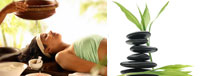
Shirodhara or Shiro dhara is a method of relieving stress and avoid many mental illnesses. Stress is a common problem in modern world, with demands from society and profession.

Shiro (shiras in Malayalam) means head and dhara is an unbroken flow (of anything). Shirodhara is the continuous flow of medicated oil through the head. Sesame oil is used in most parts of India, while coconut oil is the main base in Kerala. However there are also other oil based chosen based on the different requirements of the person. The patient will be laid on a special wooden plank on his or her back. A tiny stream of oil continuously oozes out of a vessel with a central hole. The oil falls on the center of the forehead of the person. The oil will be comfortably warm and the process continues for 30 to 45 minutes. The person experiences unexplainable relaxation and brightness.

Shirodhara often comes after full body oil massage (pizhichil or Abhayanga). The environment that the practitioner prepares for the therapy will also be free of any noise and most suited for deep relaxation, which provides complete rest to mind. It allows one to overcome stress related conditions like insomnia, anxiety, chronic headaches, hypertension and asthma. It also strengthens hair and skin of the head.

Shirodhara brings in several benefits including improved blood circulation to the brain, provides nourishments to hair and scalp, reduces nervous tension, and helps in sound sleep. There can also be different conditions of head, throat, eyes, ears and nose. Fits and epilepsy are two main conditions for which shirovasthi is suggested.

It improves the functioning of sense organs and central nervous system. Shirodhara also improves your mood and fights depression.

The choice of medicines depends on the constitution (prakriti) of the person, the season, and the specific conditions of the person.

Wheat Grass — Ayurvedic Herbs

Friday, March 23rd, 2007

Wheat grass (Triticum Aestivum) is a good source of nutrition like Vitamin A, C, E, iron, Calcium and flavonoids. Thus, wheat grass is more of a nutritional supplement than any medicine. However, recent researches have found that wheat grass has antibiotic, anti-inflammatory effects. Wheat grass is not generally viewed as a regular Ayurvedic medicinal herb.

Wheat grass can be administered for anemic persons as it has the capabilities to increase hemoglobin production. It also has purification properties, cleansing the blood and removal of wastes from the body.