Archive for March, 2007

Ayurvedic Oil Therapy, Ayurveda Oil Massages

Saturday, March 24th, 2007

Oil therapy in Ayurveda (abhyanaga) is a well-developed scheme of treatment and its benefits are visible in the form of body stiffness and flexibility after oil massage, mental composure after dhara and a variety of other applications.

Ayurvedic oil therapy mainly address vata related disorders. Remember, vata is the most prominent dosha of tridoshas. Oil therapy in Ayurveda is aimed at curing diseases mainly related to nervous system and bones. Oil massaging is also beneficial to cure body pain.

Oil massages nourish and supple the skin. It also transit the medicinal benefits of the oil used to inner tissues. The person feels instantly relieved and better organized after a massage session. This is quite a big evidence to the effect of Ayurvedic medicated oil massage on human psychology.

Full body oil massages or local application of medicated oil and massage also is in some way similar to injections in modern medicine, where the medicinal qualities of the oil is transferred directly to the blood and tissue without waiting for metabolic absorption of the medicinal part.

Ayurvedic oil therapy is also one among the purva karma (or preparatory therapy) of panchakarma, the five-step body purification method of Ayurveda. With purvakarma, Ayurvedic oil therapy is a method of releasing the imbalances into the system for quick removal from there within.

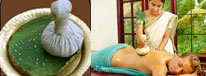
Shirodhara is an oil therapy for head and brain. It is used to relive mental turbulences and put the person at ease. It is a good psycho-therapy. The therapist allows warm medicated oil to continuously flow over the forehead. The objective is to relieve excess vata, which gives a soothing effect to the person. The oil also has properties like nourishing the hair, improving blood circulation in the brain, etc. Many authorized and unauthorized Ayurvedic treatment centers use the picture of a person undergoing this therapy in their brochures and advertisements.

Full body massaging or pizhichil is another method of Ayurvedic oil therapy, which includes pressure application of Ayurvedic oil all over the body of a person with either hands or feet (a common practice in Kerala and is called chavittithirummal). Application of medicated oil with feet is also forms an important part of marmachikitsa associated with Kalarippayattu and kalari chikitsa.

The main base oil is coconut oil followed by sesame or castor oils. There are over 100 medicinal herbs that forms part of an Ayurvedic medicated oil.

The choice of medicated oils varies with the body type of the person and the ailment for which oil therapy is being administered. In many cases like pain related to arthritis, local application of medicated massage oil is enough. The person can do it by himself/herself without the help of a masseur. However, full-fledged body massage or sirodhara requires proper selection of oils and application of oil in a scientific manner.

Ayurvedic Nutrition

Saturday, March 24th, 2007

Nutrition, as far as our thoughts go, is the ingestion of food that contains certain elements like carbohydrates, fat, proteins, minerals and vitamins necessary for the functioning of our body. When we connect Ayurveda and nutrition – it goes a step deeper. It is not only feeding the body with good food, but also nourishing mind and soul with essential ingredients – good thought, relaxed atmosphere, meditation, etc. In other words, nutrition includes nourishing mind, body and soul with essential nourishments.

Vagbhata, an Ayurvedic practitioner of 7th century puts certain guidelines for proper food. One cannot digest the food he/she takes, if, the food is not served properly and with love, overcooked, cold, dry, consumed with excess water etc. When a person takes food with troubled mind – due to grief, anger or hunger – the food is wasted.

Thus, ayurvedic food or nutrition denotes to taking not only the right food items, but also in a calm environment and with a calm mind.

Foods to avoid are too spicy, too hot, too cold, old, unclean, food. One also should not take food whenever he/she is mentally disturbed.

Not all humans are made alike. There are differences in physical and mental constitution of two persons. A nutritional type appropriate for a person may not be the same for someone else. It is therefore necessary to find individual nutritional requirements. For example, not all persons can quickly digest meat and meat products.

There are food items that can be taken in combinations and food items that cannot. While wine makes good combination with meat, milk and milk products are not suitable to be taken with spicy food.

Though there are specific directions regarding different food items, one needs to identify the combinations that are good for him or her.

Ayurveda and Natural Medicare

Saturday, March 24th, 2007

Ayurveda sees late worldwide acceptance as a natural holistic treatment method. Now people increasingly are aware of the effects of chemicals entering our body in the name of prescription medicines. Ayurveda is not just about treating diseases. It is about living a life with fullness of health by mind, body and soul.

Medicines in Ayurveda are prepared from the flowers, seeds, roots, stem and plant products like resins. There are some claims that Ayurvedic medicines have a large content of heavy metals. The fact remains true that almost every human being on face of earth has at least a hundred different harmful chemicals in his/her body.

Ayurvedic philosophy depends on treating the person as a whole by identifying his/her body type (vata prakriti, pitta prakriti or kapha prakriti) and not the diseases. It is about helping the person regain that natural healing power, instead of applying some chemicals to kill the bacteria or virus that attack the body.

Ayurvedic remedies may take some time before showing results, but there will not be major side effects that are very common with different prescription medicines. Make use of the incredible power of herbs for natural medicare with Ayurveda.

Relaxation techniques in Ayurveda is also a major thing to study. Dinacharyas help persons attain what is expected of him. Laziness and being exhausted are states that you must avoid. All you have to do to attain your full potential is to do your karma only. Nothing more – exhausting, nothing less – don’t be lazy. You will be in a relaxed state of mind, you don’t over-exert your body, thus your body too will be healthy.

Ayurveda in Kochi, Kerala

Saturday, March 24th, 2007

Kochi (also cochin, Ernakulam) is the most industrialized city in Kerala. Ayurvedic treatment in Kochi is facilitated by a series of hospitals and Ayurvedic treatment centers. You can find Ayurvedic spas with five star facilities. If you choose, you can choose to take Ayurvedic treatment procedures like massage or dhara in a houseboat or at an exquisite getaway.

Government Ayurvedic college at Thrippunithura and Nangelil Ayurveda College at Kothamangalam in Ernakulam is a major center for Ayurvedic education and training. There are also a number of Ayurvedic hospitals in the district.

Kochi is well connected to Indian locations and major international locations through road, rail or air.

Not only Ayurvedic treatment, but also the places to see at Kochi make your stay at the place known as the Queen of Arabian Sea worthwhile. You can pursue all kinds of Ayurvedic therapies like oil massage, rejuvenation therapy, panchakarma etc at different treatment centers.

Jaggery in Ayurveda

Saturday, March 24th, 2007

Jaggery used as an Ayurvedic medicine comes from palms. Not date palm. But jaggery technically is a product from sugarcane. Such jaggery is unrefined sugar, without removing minerals. Both the jaggery are prepared without adding any preservatives of chemicals. The production of palm jaggery is concentrated mostly to southern Tamil Nadu and Kerala in south India.

Sugarcane jaggery in south India is known in the names – ‘sarkkara, chakkara, sakkara, sarkara, sharkara, charkara – all are variations of same name. Palm jaggery too are called different variations of a same name – karippotti, karippukatti, karippatti, karuppatti, karuppotti, karuppu katti, karippu katti, and panam chakkara. There can be more local variations for the name.

Karippatti kappi, or a palm jaggery coffee doesn’t have any trace of coffee, but has karippatti as main ingredient, with variable ingredients like tulsi leaves, pepper, thippali or Indian long pepper. The preparation is indeed very simple – karippatti and water are taken in a vessel and heated till boiling. Add the other ingredients. Boil till the karippatti pieces dissolve completely. Drink it warm. A quick fix medicine for common cold, cough etc, it dissolves mucus and clears the throat.

Sometimes sugarcane jaggery (juggery) too is used for same purpose, but is far less effective.

Ayurveda and Holistics

Saturday, March 24th, 2007

Though the scripts of Ayurveda were written thousands of years ago, each and every word inscribed thereupon is completely true even in todayÂ’s context. There is no need to take Ayurveda and holistic treatment separately. Ayurveda is in its very nature a holistic treatment. More than a method of treatment, it is also the way of life.

More than a curing method, Ayurveda is a method of prevention of diseases by keeping a healthy lifestyle. Ayurveda provides detailed description about daily diets, daily routine (dinacharya), change in daily routine with seasonal (seasonal routine or rithucharya), which lays down in detail the things to do and things not to do. It is not only for body, but also for mind and soul. Daily routine tells you about the daily activities you should take and at what time. There is a time in the day for waking up, taking bath, taking food, working and travel, and going to sleep. The specific timings are variable according to changing seasonal conditions. Imbalances and/or pursuing of an incompatible career can seriously affect the health of a person. Holistic Ayurveda just means keeping the body and mind in a balanced state.

According to Ayurveda, human body is composed of three humors (tridoshas)– vata, pitta and kapha, which are composed of five basic elements of nature, panchabhootangal – akash, bhumi, jal, vayu, and agni. The balance of the elements and the three humors constitute good health.

It all starts with diet. Diet in Ayurveda doesnÂ’t mean mere food that you take for body alone. It is the nourishment you give to mind and soul for their nourishment. If you take food with a troubled mind, it is more likely that the food you eat is wasted, without giving you any benefits thereof.

According to Ayurveda, every minute element of nature – light, sound, smell, natural scenery, etc all can act as medicines, under favorable conditions.

Ayurveda in Kerala

Saturday, March 24th, 2007

When it comes to Ayurveda, Kerala is the only state that practices this ancient Indian system of medicine in its true sense. A major part of the population depends solely on Ayurveda, Ayurvedic medicines and Ayurvedic lifestyle for treating diseases and staying healthy. There are also unique methods of Ayurvedic practices developed in Kerala. Njavarakkizhi, pizhichil, marma chikitsa etc are the main treatment methods among them.

The selfless service of Ashtavaidyas of Kerala played an important role in the development and flourish of Ayurveda in the past two-three centuries. The ashtavaidyas, who are from the Namboodiri or Brahmin caste, were once demoted in social status by other Brahmins because they considered it is impure to deal with blood (in surgery) and touching the people of lower castes. They are called ashtavaidyas, because they were knowledgeable about all the eight angas or branches of ashtanga (eight-branched) Ayurveda.

Kerala Ayurveda is much organized than in other parts of India. There are five Ayurvedic medical colleges under Kerala Government and other six Ayurvedic medical colleges. Ayurvedic College Thiruvananthapuram, which was started by the Maharaja of erstwhile Travancore dynasty to impart Ayurvedic knowledge to the members of the ruling family is the biggest one in India. It later became a property of Kerala State and it began to officially known as a College in 1918.

The fervor of Rajas and the selfless service of Ayurvedic practitioners and teachers made Kerala the cardinal center for Ayurveda. Now there is a network 108 Ayurvedic hospitals under direct government control in Kerala and there are more than 2000 hospitals and treatment centers in the private sector. Ayurveda in Kerala is also closely associated with Sidha-Vaidya, Unani, Naturopathy, disciplines of treatment and wellness.

Ayurveda and Culture

Saturday, March 24th, 2007

IndiaÂ’s culture is greatly influenced by the lifestyle as prescribed by Ayurveda. For a long time, people of India (Kerala) used to wake up early in the morning, do Surya Namaskar (sun worship), temple visits, take healthy meals, slept well, and lived healthy. Each of these activities have health effects to mind, body and soul. For example Surya Namaskar and meditation that are performed before the sunrise prepare one to face the challenges of the day.

The dinacharya (daily routine) prescribed by Ayurveda (and Yoga) put emphasis on health of mind, body and soul.

“Samadosha samagnischa samadhatu malakriya Prasanna atma manah swastha itih abhidhiyate” is a Sanskrit slogan which describes that health is “having a balances state of tridoshas (three humors), agni (fire – the digestive power), dhatus (tissues), mala (biological waste products), cheerful state of atma (soul) and peaceful functioning of sensory organs and mind.”

To maintain this state –healthy body, healthy mind and healthy soul – one needs to observe dinacharyas (daily routines), which changes with ritus (seasons), ritucharyas (routines for the season).

For the healthy mental being, one needs to take a job that is appropriate for his/her talents and skills. Maintaining good human relationships within family and society is also another aspect of healthy well being.

According to Ayurveda, nothing in this universe is without a cause. The sunlight, breeze, the sound from rivers, clouds, smell of flowers – all have medicinal value or curing capacity. If not treating body aberrations, it will address mental conditions and fulfilling the need of soul. Thus the culture of India can be said to be evolved around Ayurvedic principles. If the general habits and behavior of a person and the society in general determines the culture of the land, dinacharyas and ritucharyas determine the culture of India, which is to find value in every seemingly insignificant element.

Thus, Ayurveda is not just a method of treatment. It is also about philosophy, psychology and theology.

Ayurveda and Sanskrit: The Big Language Mother for all Universe

Saturday, March 24th, 2007

Sanskrit scientific literature is an explosive source of endless knowledge. The four Vedas, Ayurveda literature, etc have gems of knowledge that no one can appreciate in a whole life. Ancient Ayurvedic formulas, suggestions, medicines, treatment methods, life style directions, etc are written in pure Sanskrit. Sanskrit or Samskrita literally means something that is highly processed. Sanskrit is indeed a processed language. Modern computer scientists say that Sanskrit is the most efficient language for writing computer programs.

A sloga or sutra that has only a few words or lines in Sanskrit, when translated into other languages can run into several pages.

One example:
Ku vaidyaha, Nripa doshada
Translates into: “fake and fraud doctors arise because of the incompetence of king (ruler)

Gems of knowledge are written in this highly processed language, mostly in poetic form

Therefore for a total appreciation of Ayurveda, one must acquire basic knowledge of Sanskrit. Learning Sanskrit opens the door to many invaluable gems of human kind.

Ayurveda knowledge is now available in Malayalam and English languages. Any form of Ayurvedic knowledge is direct or indirect translation from Sanskrit. Learning this most peculiar language on face of earth never goes in vain.

Apart from Ayurveda, you can find abundance of literature in the form of ValsyayanaÂ’s Kamasutra, and poetic plays from different poets of yester years. In fact, you can find many literary works like Vedas, Puranas, Upanishads, etc.

By Sanskrit literature, it is emphasized that they refer to ancient scripts written centuries ago. Learning Sanskrit and Ayurveda goes hand in hand – exploring best of both worlds, for the nourishment for fullness of life. They will touch you not only at a physical or mental level, but also in a metaphysical way.

Ayurveda and Civilization

Saturday, March 24th, 2007

Ayurveda is a product of Indian civilization, which emphasized a lifestyle that is in tune with Mother Nature. While considering the fact that Ayurveda is a holistic life science or science of life. You will find that each principle or law put forth by Ayurveda has its influence in the healthy well being of a person.

Ayurveda has evolved over many hundreds of years – but the basic principles remain the same as it was 3000 years ago. Living with nature is the only way to lead a healthy life. It put emphasis on purity of mind, body and soul. Only then can one attain the balanced state of health. If any of the element is slightly out of balance, it is aberration from healthy state.

There are dinacharyas and ritucharyas prescribed by both Ayurveda and Yoga (the twin sisters from ancient Indian civilization).

It is now very much difficult to tell if Ayurveda influenced the culture of India or vice-versa.

Saturday, March 24th, 2007

Humankind of all ages used some kind of aphrodisiacs, most of them, naturally herbs. It will be curious to have a look at the aphrodisiacs used in India and other parts of the world.

Milk
Milk, in normal cases is not regarded as an aphrodisiac. Yet again, the newly wed bride and groom share a glass of milk in the evening of their wedding day. The milk usually will be added with ground pepper, almond, honey or sugar. Vatsyayana in his world renowned text of Kamasutra suggests the use of fennel juice in milk. Milk provides the nutrients to the body and help the couple sustain their passion.

Eggs
Egg yolk, is considered to be an aphrodisiac by Arabs. It is a natural symbol of fertility throughout the world. Egg yolk coupled with honey can sustain the power for longer times. There are Arab stories that tell about men that stayed on for about 41 days by taking just egg yolk and honey.

Honey
Hey, Honey. The reference here is real natural honey that bees collect from thousands of flowers. Honey is universal symbol of love. There will not be a place on earthÂ’s face where the couples donÂ’t address each other honey when they feel it.

Rose
“My Love is a Red Red Rose” who can forget this line by Robert Burns? Rose is real stimulant and enhancer of sex life. Aromatherapy uses the smell of rose flowers to create that soothing effect and calmness.

Shilajit
Shilajit is traditionally an important aphrodisiac in India that enhances passion and gives ‘power of a bull’ to men of any age.

Mucuna Pruriens (Naikkurana, Indian Ginseng, Goat Weed)
Viagra can be called artificial Naikkurana. This plant in the bean family is used by Indians for many centuries and now the world appraise the effectiveness of this herb. Though it is primarily a male sex stimulant women too use it. The results are visible in less than three weeks in the form of increased sexual desires, fuller and better erections, stamina, good general health, etc are the benefits of taking the seeds of this herb.

Ginseng
Chinese alternative for Naikkurana, this herb has a history of over 5000 years as an effective aphrodisiac. Roots are the main usable part.

Pineapples
Oh, Yeah! Pineapples have aphrodisiac properties. Take a glass of vitalizing pineapple juice everyday. To get the aphrodisiac effect, make a cocktail with some honey and a bit of rum.

Strawberries
Strawberry is sexy to feed and be fed. Choose dark red berries, that take you to high mountains of desire. It is rich in vitamin C, the visible effect is most prominent.

Betel Nut
Chewing of ripe betel nut collected from betel palm, along with betel leaves has a long history in India. It is a favorite pastime for both men and women. Both of them are offered to god and as dakshina to gurus at the start of education. Ayurveda considers betel nut as an aphrodisiac.