Archive for March, 2007

Friday, March 23rd, 2007

Kaya chikitsa or kayachikitsa is the first branch of Astanga Ayurveda or eight-branched Ayurveda. Kaya means body and chikitsa means treatment.

Charaka Samhita by Acharya Charaka is the first script that gives elaborate knowledge about Kaya chikitsa or Ayurvedic general medicine.

The practitioner must identify first the nature of the person (rogi pareeksha), and then the nature of the disease (roga pareeksha). This is an elaborate process and goes through different stages of assessing the dosha type of the person, his/her physical and mental capabilities, the stage of disease etc are all taken into account before prescribing a medicine.

According to Charaka, the body has the power to cure any imbalances that occur to the body. The function of medicines is to revitalize the life force in our body system, thus enabling our body reach a healthy state.

Diseases according to Ayurveda are the imbalance caused to the tridosha system of body. imbalance in any one dosha can affect the balance of other doshas too. Thus, it is important to quickly assist the body reinstate the state of balance. The imbalances can sometimes be occurred due to the action of mind or due to irregularities in sapta dhatu system or due to deposit of malas (wastes or toxins).

Sodhan or purification of the body is the first thing about treating the body. Panchakarma is a method of full body cleansing to expel accumulated toxins from the system. Panchakarma is a deep cleansing method, which involves five karmas namely nasya, vaman, virechan, basti and rakthamoksha.

Shaman is treating the body with snehan and swedan. Snehan is oil therapy and swedan is forcing the body to sweat, after shaman.

Purva karma is the preparatory procedure for panchakarma and paschat-karma is the therapy that follows panchakarma.

The body naturally has a tendency to expels accumulated bodily wastes (ama). At times, this expelling of toxic wastes can become difficult for the body. The sodhan therapy is a way of assisting the body in expelling those toxins from the body, thereby facilitating healthy functioning of body tissues.

Kati Vasti — Ayurvedic Back Care

Friday, March 23rd, 2007

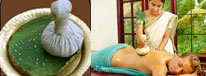
Kativasti (or Kati basti) is an Ayurvedic procedure of retaining warm medicated oil over the lower back bordered with a herbal paste. The therapy can last for 45 to 60 minutes. It is a general cure for almost all types of spinal problems and back pains.

The person is let lay on his/her stomach on a massage table. A herbal paste is made into a cup with the skin of lower center back forming the bottom of the cup and the herbal paste its borders or walls. Medicated oil is poured into the cup and retained there. Back pain related to disc problems is cured this way.

Balachikitsa, Pediatrics in Ayurveda

Friday, March 23rd, 2007

Balachikitsa (pediatrics) in Ayurveda is one among the eight branches of Ashtanga Ayurveda. Other name for Bala chikitsa is Kaumarbhritya or Kaumara bhritya. Caring of children follows two main methods – preventive and treating methods. Preventive methods start even before the birth of child. In fact, it begins even before the child is conceived within the womb of a woman. Fresh food, pleasant mind, good atmosphere, etc are necessary for the mother to give birth to a healthy child.

Balachikitsa covers special care to be given to the child in each and every stage of growth.  Specially prepared ointment is applied to the whole body, excluding head, mainly to avoid future diseases caused due to vata. The room where the baby is kept is sterilized by smoking with medicinal herbs that have sterilizing and cleaning properties.

The best food for a new born baby is breast milk.

Bala (pronounced ba-lah) means children below the age of 16. Almost all diseases that affect adults attack children too. Diagnosis of the disease can be a bit difficult with children. Kids and children are also given much lower doses medicines than to adults.

Vagbhata in his classical writings, Ashtanga Samgraha and Ashtanga Hridaya, which are mostly descriptions and abstract of previously available books, Charaka Samhita and Sushruta Samhita tells in detail about Balachikitsa including prenatal, natal and post natal care to be given to children. Healthy children are responsible for healthy society – this is the unquestionable view of Ayurveda. It not only deals with the physical care, but also the requirement of giving healthy food for the mind. Ayurveda believes that both healthy mind and healthy mind are inter-dependant.

Balachikitsa is the branch of Ayurveda that deals with health issues of children, from before conception to the age of sixteen.

Friday, March 23rd, 2007

Kashaya vasti or decoction basti is an Ayurvedic therapeutic method, which includes cleansing of colon with the administration of honey, medicated oil and an appropriate decoction (kashaya, kashayam). It aims are removing malas (accumulated digestive wastes) and nourishes and strengthens the dhatus. It also strengthens the body tissues and enhances the immune system of human body.

Diseases caused due to the action of vata are treated this way. A physician chooses the oils and medicines according to the stage of the disease and according to the physical conditions of the person.

Damshtra Chikitsa, Toxicology in Ayurveda

Friday, March 23rd, 2007

Damshtra Chikitsa (toxicology)  is one among the eight branches (ashtanga) of Ayurveda. It comes in the section called Agata Tantra. The word ‘damshtra’ memorizes the teeth of a poisonous snake.

Visha is any substance that can cause illness or even death to man or any living thing.

Visha is the opposite of Amrit, which gives immortality to man. Anything can become toxic when taken in an excess amount. An accurate definition of toxin is really not possible. There are several plants that have highly toxic fruits or flowers. The same fruits or flowers or other parts can be used as a component for highly effective medicine to treat many serious diseases and conditions.

The substances that cause illness can generally be called toxins. The main divisions here are toxins from bites of snake, insects, etc and ingestion of toxin by eating, drinking or inhaling. Toxic plants and plant products absorb the prime priority here. Incompatible food too can act as toxin.

The much discussed topic, free radicals in medical circuits is an example of endo-toxin.

Snake Venom
Though viewed with terror, only a few species of snake actually has venom powerful enough to kill a human being. Snake venom can cause critical damage to blood structure – this later causes conditions like anemia, asthma, etc. Proper medication can prevent such situations from occurring.

Insect bites
Insect bites can cause pain, itching, boils, etc. Ayurveda suggests different medicines for specific species to use under given conditions. The medicines can give results only when administered in the desired manner.

Artificial Toxins
Insecticides, chemicals, food additives, vegetables and fruits grown with the help of fertilizers, pesticides etc are all artificial toxins. Autoimmune diseases develop due to the intake of artificial toxins for a long period. Medicines that depend solely on chemical combinations can push the person to an infinite cycle of killing a toxin with another one, and later falling prey to a toxin that is powerful in his body.

Friday, March 23rd, 2007

Basti or Ayurvedic enema therapy is often regarded as the key procedure of panchakarma. Basti means introduction of medicines or nutrients through the anus, or openings in sexual organs. This is a method of mobilizing and removing toxins (ama) accumulated in the lower part of the body. The medicated oil given as enema, cleanses the colon. It also improved the muscle tone.

There are eight types of Basti, they are:

1. Anuvasana (oil basti) is a method of removing excess vata. It cures pure vata disorders. Excess hunger or dryness are usually vata disorders.

2. Niruha – Ashtapana is used to cure nervous conditions, gout, certain urinary problems, pain, and heart diseases.

3. Uttara Basti – or top basti is enema given to urethral opening for men and vagina for women. Cures disorders associated with respiratory tissues.

4. Matra basti or dose basti – is daily oil basti or daily oil enema for people who exert too much or have too much sex. It is also for persons with chronic vata problems.

5. Karma Basti is a schedule of 30 Bastis

6. Kala Basti is a schedule of 15 bastis, 10 among them are oil bastis and 5 are decoction bastis.

7. Yoga Basti is a schedule of 8 bastis, five oil and three decoction bastis.

8. Bruhana Basti also called nutritional basti or nutritional enema is the application of warm milk, herbal ghees etc for specific conditions.

Persons suffering from conditions like diarrhea, bleeding at rectum, chronic indigestion, diabetes, anemia, tuberculosis, children below seven years etc are not fit to receive this treatment. This list however is not exhaustive. The physician will determine if basti is good for the person after considering several factors including his or her physical capabilities.

Shalakya Tantra, ENT in Ayurveda

Friday, March 23rd, 2007

Shalakya tantra is one among the eight branches of Ashtanga Ayurveda. Shalakya Tantra deals with diseases that affect parts above neck – eyes, nose, throat, ears, and head. Shalakya tantra has various techniques to diagnose and treat different diseases that affect eyes, and other parts.

All the three major classics of Ayurveda – Charaka Samhita, Sushruta Samhita and Ashtanga Hridaya deals with Shalakya Tantra. According to Ayurveda there are 72 netra roga (eye diseases), 11 osta roga (lip diseases), one gand rog (lymph disease), 23 danta rog (dental diseases), 6 jihva rog (tongue diseases), eight talu rog (palate), 18 gal rog (throat diseases), and eight savagat mukhrog (diseases affecting mouth cavity and face).

Sushrut Samhita tells in detail about surgical treatment of different eye diseases and precautionary measures to prevent spread of infections. Sushruta, considered to be the first known human surgeon, also describes the methods of removal of unwanted growths like tumors.

Shalakya Tantra deals not only with major treatment measures for diseases affecting sensitive parts of the head, but also puts detailed direction about easy home remedies for diseases like migraine, infections in eye, ears and other parts.

Salya Tantra- Surgery in Ayurveda

Friday, March 23rd, 2007

Surgery has longer history than treatment using medicines in Ayurveda. Salya Tantra or the technique of surgery is one of the eight branches (asthanga) of Ayurveda. Ayurvedic surgeons are traditionally known as Dhanwantareeyas (after Dhanwantary).

Lord DhanwantaryÂ’s image has in his one hand a pot of Amrit (the divine nectar of immortality) and in the other a leech, suggesting surgery. Dhanwantary has once taken incarnation as a human, as the son of the king of Kashy. (Human) DhanwantaryÂ’s great grandson, Divodasa was an expert in Salya Tantra or surgery. Sushrutha, Ouradra, Pushkalavada and Oupadhenan had their education under Divodasa.

Dhanwantary and Jeevaka did surgery for brain, while Nimi specialized in ophthalmologic surgery. Bhoja was an expert to treat wounds occurred from weapons (sword, arrow, etc) and Sushruta specialized in cosmetic plastic surgery. Westerners got the idea of plastic surgery, when a local Ayurvedic surgeon re-created the nose of a British soldier named Kovaski, which he lost in a battle with Tipu Sultan of Mysore in 1792. Now Sushrutha is regarded as the father of modern plastic surgery.

There are surgical methods for treating bodily pimples, cancer, cataract, bones and diseases that affect urinary bladder, liver, intestine, etc. Surgical methods were also practiced on ear, nose and throat. Dental surgery too was not rare.

Surgery had three main phases, poorva karma (pre-surgery), Sashtrakriya (surgery) and paschath karma (post-surgical treatment). Poorva karma involves diagnosing the disease and the part of the body that affects the health of the person and pashchath karma refers to post surgical care.

Sasthrakriya is the Sanskrit word of surgery. Sasthra means a weapon and kriya means and action. Thus sasthrakriya or surgery is an action with a weapon or tool. There are about 108 different tools used in surgery, all of them have striking similarities with the surgical instruments that allopathic surgeons use.

In Kerala (and India) dealing with blood was considered an inferior thing. The surgeon also was responsible for the health of the patient. If any serious damage happens to the patient, the surgeon had full responsibility. He even got death sentence. All these have led to the extinction of surgery in India.

Ayurveda Treatments

Friday, March 23rd, 2007

Ayurvedic treatments include medication, massaging and surgery. Medication can be orally administered, applied on body, or inhaled as smoke. Massaging is a method of facilitating blood circulation to all parts of the body and to remove pain and bodily disorders.

Another form of treatment in Ayurveda is detoxification or body purification by expelling bodily wastes called. Panchakarma therapy aims in deep cleansing of body.

Rasayana chikitsa or rejuvenation therapy aims at rejuvenating the person to youthful vigor and agility.

Surgery is performed on eyes to treat some diseases that affect the eye.

The treatments for a person are prescribed only after analyzing the physical capacity of the person, his or her mental capacities and many factors associated within. Treatments are prescribed for the person and not for the diseases.

This is the fundamental difference between Ayurveda and Allopathy. Allopathy aims at treating the disease by directly attacking the factors that lead to the disease. If it is a pathogen that causes the disease, Allopathy doctors prescribe antibiotics. Addressing the person is an absent entity in Allopathy. Ayurveda doctors prescribe the medicines, diet and lifestyle modifications to help the body expel the toxins and regain health.

One among the prime requirement of Ayurvedic medicines is that they must not produce side effects.

After Ayurvedic treatment, the full system of the body is rebalanced for better healthy state.

Friday, March 23rd, 2007

Jara chikitsa is one among the eight branches of Ashtanga Ayurveda. Jara chikitsa or Ayurvedic geriatrics deals with diseases and conditions associated with old age. Jara Chikitsa is also called Rasayana Chikitsa or rejuvenation therapy, because it aims at revitalizing the body tissues for a youthful being.

Jara (pronounced jera) means wrinkles on skin. Rasayana chikitsa, however is not only for people of old age, but also used as a preventive method against diseases and unhealthy body changes. Rasayana chikitsa is aimed at longevity of life, good mental condition including sound memory and physical strength.

Rasayana chikitsa is re-vitalizing tissues that were worn out or are in the process of wearing out due to factors like diseases and aging. Rasayana chikitsa enhances immune system, arrests aging, gives luster to the skin, gives youthful enery, nourish blood and body tissues (sapta dhatus), and brings in several benefits.

Real rejuvenation therapy is too hard for modern man. It requires moving into an isolation for a long time, as if in a secluded hermitage, without any connection with outside world. Such a therapy is called kaya kalpa. The person is taken to a hermitage like environment. The person will not be able to connect with the outside world by telephone, TV, or newspapers. The environment is relaxing and gives the best stress-free for the person. The person will however be under the observation of an Ayurvedic practitioner. There are special rasayanas and specially prepared food items. The person is also directed to follow a sage like lifestyle. At the end of the therapy, all the seven dhatus of saptha dhatus will be replaced with new tissues. This is the rejuvenation. Today kaya kalpa therapy is given on a commercial basis for as little as 28 days.

Rejuvenation therapy as it is called today includes body purification therapies like panchakarma followed by taking in appropriate rasayanas. It includes rasayana chikitsa on a very short-term basis. Such short-term therapies become necessary when the person has very little time or is not willing to go through the long and often hectic procedure.

Three-fold Rogi Pareeksha — Ayurvedic Diagnosis

Friday, March 23rd, 2007

Trividha pareeksha or three fold diagnosis gives the Ayurvedic practitioner an overall view of the specific conditions of the person and the disease. Darshan (observation), sparshan (touching) and prashna (interrogation) are the three steps of rogi pareeksha that an Ayurvedic practitioner performs to reach an anuman (inference).

Darshan or direct observation diagnosis is the first of the three fold rogi pareeksha methods. The general physique type, movements, etc are observed.

Sparshan or touching method of Ayurvedic diagnosis gives more information about the physical type of the person. Ayurveda puts great importance to individual, personalized diagnosis to prescribe a treatment that is completely right for the person.

Sparshana, touching or palpation method of diagnosis is the first in trividh pariksha (three-fold diagnosis), in which the practitioner examines the person by touching. There can be factors that may not be clear by direct observation, which is made clear by palpation method of diagnosis. The physician calculates the pulse, body temperature, texture and type of skin, eye-balls, etc.

The type of skin gives an indication of the body (dosha type) of the person. Vata type persons have thin, dry, cold, wrinkled skin. Pitta types have moist, soft, firm, warm skin. Pitta dominant types have thick, smooth, moist, soft skin.

The last method is prashna or interrogation. The physician asks in detail about the background of the disease, his/her lifestyle, eating habits, change in any activities lately, etc to identify the reasons for the disease and possible cures for the exact condition.