Posts Tagged ‘Herbs Plants’

Pashanbhedi (Bergenia Ligulata) Ayurvedic Herbs

Friday, March 23rd, 2007

Pashanbhedi (Bergenia ligulata) is an Ayurvedic herb, mainly used as a diuretic. The term pashan bhedi literally means something that breaks (bhed, bhedya) a stone (Pashana). It is reputed as an effective medicine to dissolve kidney stones.

The also forms part of treatments for fever, diarrhea, etc.

Pathimukham (Caesalpenia Sappan) — Ayurvedic Medicinal Herbs

Friday, March 23rd, 2007

Pathimukham (Caesalpenia sappan) is a perennial tree with pinnate compound leaves. Its pink-rose flowering also makes it an ornamental plant.

The flowers also form a base for Ayurvedic fairness creams. The heartwood produces a red color which is useful in coloring food and fabrics.

Pathimukham tree is cultivated for its medicinal value. Its bark, heartwood, flower and roots are all usable parts.

The water kept in the heartwood of pathimukam tree is rich in minerals and has diuretic, anti-oxidative, thirst quenching, anti-bacterial and tonic properties. It is also blood purifying and is a good drink for persons with diabetes. It cures jaundice, cough, respiratory problems, etc.

The other names are sappan wood and bukkum wood tree. It strives in different climatic conditions, except frost and drought.

Caesalpinia sappans belongs to the family Caesalpiniaceae.

Peruvalam (Clerodendron infortunatum) Ayurvedic Herbs of Kerala

Friday, March 23rd, 2007

Peruvalam (Clerodendron infortunatum) is a small herb with big leaves. It grows to a maximum height of 9”, with no branches and produce circular leaves with 6 inch diameter.

In Indian homeopathy, it is used as a remedy for diarrhea.

Peruvalam is used in post natal care.

It is also used to dress fresh wounds.

Clerodendron infortunatum belongs to the family Verbenaceae.

Friday, March 23rd, 2007

Podina is a perennial herb grown in high ranges and cold areas of India. It is also known by the names mint, pudina etc. It is used as a spice in some culinary preparations.

It has a soothing effect on respiration and is used in treating headache, cough, vomiting, sore throat, etc. Menthol and extraction from Podina is used in the preparation of certain pain balms and cold balms.

Mentha Arvensis comes in the plant family Lamiaceae.

Friday, March 23rd, 2007

Panikoorka (Pashanbheda – Coleus Aromaticus) is an Ayurvedic herb of Kerala, with various names – navara or navarayila, karpooravalli, omavalli, suganda, pashanbheda (pashanbhanda) etc. Its Latin name is also variable – Coleus aromaticus and Plectranthus amboinicus refer to the same plant.

The bluntly teethed leaves are fleshy with light green color. The stem is weak and spread on the ground. The stem and base will rot with water logging. Propagation is quite easy with stem cuttings.

Panikkoorka is used in the treatment of a variety of diseases affected by virus, bacteria and other microbes. Indigestion, diarrhea, rheumatism, whooping cough, bronchitis, tooth ache, etc are also treated with medicines prepared from the leaves of this plant. It is also an effective antidote for insect bites.

It is also used in the treatment of skin disorders, dandruff and different types of allergies.

Coleus aromaticus belongs to the family laminaceae.

Papaya -Ayurvedic Medicinal Plants

Friday, March 23rd, 2007

Papaya is a popular fruit found in all parts of India in almost all seasons. Papaya is consumed mostly in summer season. Papaya fruits have many properties – it helps in regularizing digestion and cleanses intestine. It also expels ringworms and hookworms.

The dried latex collected from unripe papaya fruits, papaine is used in the preparation of some Ayurvedic medicines used in the treatment of warts, moles, eczema, and skin allergies, etc. Medicines for arthritis is also find the use of papaine. Fresh cuts or wounds are also treated with applying the juice of a fresh fruit.

Apart from fruits, roots and leaves also have medicinal properties.

Papaya is a small tree, growing usually in the range of 2 to 10 metres.

Carica Papaya belongs to the family caricaceae and is popularly known as papaya, kaplanga, papanga (in Kerala), paw paw, Papaw, Kates, etc.

Poovam Kurunnu (Vernoia Cinerea) — Ayurvedic Medicinal Herbs

Friday, March 23rd, 2007

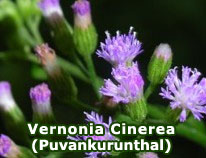
Poovamkurunnu (Vernoia cinerea) is an Ayurvedic herb that grows to the size of about ten to 35 inches. It is a branched herb and produces purple flowers, which are compound flowers (flowering heads) and produce many seeds, which are propagated by wind. It is found in wilderness and wastelands. It is wrongly considered a weed by farmers of different parts of India. The farmers in Kerala seem to know the medicinal value of this herb and donÂ’t use any harmful chemicals to eradicate this herb from the farmland.

Poovam kurunnu has different medicinal properties and used in different Ayurvedic medicines for skin conditions, leucorrhoea, intestinal worms, headaches, wounds and serious diseases like malaria. It has anthelmintic, antipyretic, properties.

The English names of this plant are iron weed and vernonia.

Vernoia cinerea belongs to the family Asteraceae.

Puli (Imli) or Tamarind, Tamarindus Indica -Ayurvedic Herbs

Friday, March 23rd, 2007

Puli (Tamarindus Indica) is used as a spice in different culinary preparations. Not only its dried ripe fruits, but also the leaves, flowers, and sprouts are taken in different situations. It is widely cultivated or grown naturally in abundance in almost all parts of India, especially towards the south. Puli is Malayalam word, imli or imali is Hindi and Tamarind is common English name for the plant.

The paste prepared by crushing the leaves is a quick remedy for boils and swellings. The leaves also have a cooling effect and hence used in the treatment of cold. It also relives liver congestion, chronic constipation etc. It is also an anti hemorrhoid.

Puliyarila (Oxalis corniculata) — Indian Ayurvedic Herbs

Friday, March 23rd, 2007

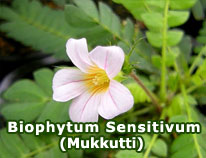
Oxalis corniculata is an annual herb, used as a component for Ayurvedic medicine and has properties like diuretic and refrigerant. It is used treating disorders of liver and digestive problems. The herb has power to prevent certain cancerous growth. The leaf pulp is applied over insect bites and burns. Puliyarila also has antibacterial properties.

The plant is known as yellow sorrel.

Oxalis corniculata belongs to the family Oxalidaceae.

Punna (Calophyllum inophyllum) Ayurvedic Medicinal Plants

Friday, March 23rd, 2007

Punna (Calophyllum inophyllum) is an evergreen tree with smooth leaves and thick foliage. During flowering season, it produces small white flowers with few pink stripes. The flowers are fragrant. The fruits are spherical and sometimes a plaything for children, because of its resemblance to the shape and size of playing marbles. The fruit has a fleshy outer covering, inside which is a tough shell that protects the single large seed.

The tree can tolerate almost all kinds of weather conditions.

Oil extracted from the seeds has different medicinal uses. It is anti-inflammatory and has pain relieving properties. It is used in the treatment of rheumatism and arthritis. It also has use in treating different diseases affecting skin.

Carophyllum inophyllum belongs to the family Clusiaceae.

Friday, March 23rd, 2007

Khus khus (cuscus) is grown almost throughout India. It is mainly used for its effects on circulatory and nervous sytem. It sooths the circulatory system and helps in regulating circulating system. It is pleasantly aromatic and forms a major constituent for some soaps.

Its Malayalam name is ramacham, Sanskrit name is ushira. It is related to lemon grass.

Vetiveria zizanoides is in the plant family poaceae.