Posts Tagged ‘Articles’

Cause of Diseases According to Ayurveda

Saturday, March 24th, 2007

It is disease whenever there is a deviation from the total healthy state (both physical and mental) of a person. Swastya (health) is the balanced state of tridoshas. Whenever there is a disturbance within the doshas, it can cause diseases. The dinacharyas and ritu charyas are designed to keep tridoshas in balance and hence for a healthy body. However, diseases can still happen even with strict compliance with lifestyle and diet controls. The factors that somehow disturbs or vitiate the doshas are the root causes of a disease.

Another cosmic concept of Ayurveda is loka-purusha samya concept, which refers to the identification of loka (world- universe) with purusha (man). There is a constant interaction between the microcosm (man — by man, here means every living thing and not only a human male) the macrocosm (universe). Every microcosm is a representation of a bigger macrocosm. There is a harmony between man and universe. There are actions all the time and whenever there is an imbalance in action, it can lead to a disease state.

The healthy interaction between man and universe is through three channels namely

Prajna, Buddhi or intellect
Indriyatha or sensory
Kala or natural rhythms

All the three factors, when in balance is called samayoga. There are three types of imbalances – atiyoga (excess), ayoga (deficient) and mithyayoga (distorted sense).

The deviations of prajna, indriyatha or kala, from their balanced state can cause diseases. The most prominent symptom of imbalance will be vitiation of doshas.

Prajnaparadha (due to intellect) diseases affect the mind. Wrong understandings and decisions, and going against his/her knowledge.

Asatmyendriyatha (affecting nervous system) directly affects the nervous system and mind. The mind perceives certain stimuli, which leads to stress, leaving way for disease. Sattwa quality of the mind gives way to rajas and tamas. This in turn vitiates the doshas, resulting in physical diseases.

Kala parinama (evolution over time) diseases occur due to the inability of the person to cope with changing cycles of nature. Directly defying the change in conditions leads to diseases. Variation in immune capacity with change in seasons is an experience of everyone. Diseases are common during change in seasons. There is also change in breathing pattern within the day. There are also times when man and woman have increased sexual desire. Menstrual cycle is another natural rhythm.

Ayurvedic Relaxation with Medicated Oil Massaging and Other Techniques of Relaxation

Saturday, March 24th, 2007

The Sanskrit word Ayurveda translates into “the science of life”. Ayurveda has its own view and philosophies on universal existence.

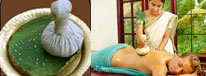
Ayurvedic relaxation massage is an important relaxation treatment to relieve tiredness by promoting blood circulation, relaxing muscles and revitalizing essential body systems.

Ayurvedic Dinacharya or daily routines form an important part of Ayurvedic relaxation. By controlling the body activities and keeping bodily activities in sync with nature can help you relax even in stressful situations.

Thus, Ayurvedic relaxation is not just a matter of a few hours, but being calm and collected in all your daily affairs.

Purvakarma (purva karma) which comes before panchakarma uses shirodhara, treats the person with a slow, steady flow of pleasantly warm medicated oil on his or her head. This therapy calms down the nervous system. Mental clarity, better comprehension, alertness, relaxed state, and tranquility are the effects of shirodhara.

The Four Basic Constituents of Human Body

Saturday, March 24th, 2007

According to Ayurveda, human body is composed mainly of four basic elements namely Akash (ether or space), Bhumi (earth or bodily mass), Jal (water), Vayu (air) and Agni (fire or energy).

These five elements join to form Doshas (tridosha), Dhatus (sapta dhathu), and Malas, which have further divisions.

Dosha (doshas, tridosha)
Vata, pitta and kapha are the three doshas (tridosha) of human body. They are derived from the five basic elements (panchabhootas) of nature, namely, Akash (space, sky or ether), Bhumi (earth), Jal (water), Vayu (air, atmosphere) and Agni (fire, energy). The doshas form human body and keeps the body in a healthy condition. Any imbalances to any of the dosha can cause disease, which will in turn affect the balance of other doshas too. Persons are also classified based on the dominant dosha, prakriti of the person.

Dhatus (dhathus, sapta dhatus)
Seven dhatus form the building elements of human body. They are Rasa (fluid, plasma), Rakta (blood), Mamsa (flesh, muscle), Asthi (bones), Majja (bone marrow) and  Shukla (shukra – semen). The supply of dhatus determines the nourishments to different parts of the body and healthy being of internal and external organs.

Mala
Mala (or malas) is anything that is a waste product in human body. The different malas are digestive waste, urine, sweat, air, menstrual blood, etc. It is the responsibility of humans not to suppress the release of any mala or waste product from the body. They are toxic inside our body, causing different diseases. Not suppressing any natural urges (sareera vega) is essential for expelling toxins from our body.

Importance of Breast Feeding According to Ayurveda

Saturday, March 24th, 2007

Ayurveda considers breast milk to be the best food for babies. Modern medicine too recommends breast feeding to newly born kids because of the several benefits of motherÂ’s milk. In case the mother fails to produce enough milk, Ayurveda recommends hiring a milk-mother, a woman who also has got a baby and produces enough milk.

Colostrum is rich with immunoglobulin, an element that enhances immunity in the infants. Infants absorb the required nutrients from motherÂ’s milk more efficiently than from cowÂ’s milk. MotherÂ’s milk is also rich in all vital nutrients required for the proper development of the baby. Ayurveda also tells that motherÂ’s milk put all the doshas in balance. There is no possibility of contamination for breast milk. The body temperature of the mother is also appropriate for the kid.

Apart from the tangible advantages of milk for the baby, breast feeding also builds a strong bonding between the mother and child.

Ayurveda and Spirituality

Saturday, March 24th, 2007

Spirituality has a great influence in Ayurveda. Just as vaguely said elsewhere about Ayurveda as the science (read knowledge) of life, to be healthy a man (or woman) must be healthy by mind, body, and soul.

It is the knowledge of divinity within us that makes us healthy. That is the more you know about the divinity of your body, mind, and their connection with soul and the universe, you will live a healthier life.

When talking in terms of Ayurveda, the practitioner (Ayurvedic doctor) has to inspire his patient or client to awaken to a higher sense of divine self.

You may now be a bit confused. What has spirituality to do with medicine? Spirituality of a person has direct influence on his health is a truth.

All living things has a purpose. God has given unique capacities or talents to persons. To nourish that talents and live a life accordingly is the biggest task for man. It is only then a person will be able to achieve higher sense of spirituality.

If your office work necessarily doesnÂ’t make use of your talents, but demands some poorly developed skills. This creates conflict. Spirituality in Ayurveda means finding a job suited for your personality and talents.

The next thing affecting good health is tensions in relationships. Instead of providing mutual support, relationships increasingly become abusive.

If a person doesnÂ’t depend on other persons for his/her comfort and happiness, it is a healthy sign. The only person he or she can depend on is God. When you see God as your support, you have no reason to worry about abusive relationships.

Both the doctor and the clients are to experience a higher spiritual sense while the period of treatment. It is only then can you say that the treatment was complete.

In a sense Ayurveda doesnÂ’t end with treatment, it is ongoing healthy life through carefully designed dinacharyas and ritucharyas.

Ayurveda, Tantra and Yoga

Saturday, March 24th, 2007

For many centuries, the people of India practiced different techniques of Ayurveda, yoga and tantra to attain specific gains of health, spirituality and fullness of life. While Ayurveda includes everything – yoga and tantra act as supporting pillars for Ayurveda.

Yoga helps one attain physical, physiological and mental controls. That is mind over matter. This sister of Ayurveda deals mainly with spirit. Practicing yoga brings a man/woman to tranquility, a state of equilibrium. Yoga encompasses everything included in spiritual union of mind, body and soul with holy one-ness. The main principle behind yoga is looking into oneself and actualizing what is required of him or her. This principle is in tune with Ayurveda and Tantra.

Tantra denotes to the best way of enjoying one’s life by redirecting energies in desirable directions only. It is also the way to feel the awareness that one’s body is part of a larger cosmic reality. Every action includes manipulation of energy – breath, speech, thinking, and any physical action. A tantra practitioner is aware of the contact points between mind, body and spiritual reality.

Ayurveda in Thiruvananthapuram, Kerala

Saturday, March 24th, 2007

Kerala is the only place where the rich tradition of Ayurveda is preserved. The biggest Ayurvedic College in India is at Thiruvanthapuram. There are also a variety of Ayurvedic hospitals, spas, and treatment centers which are frequented regularly by visitors from around the world.

Ayurvedic resorts, massage spas, therapy centers, etc are in large numbers in private sector too. A government and a private Ayurvedic college and a network of Ayurvedic treatment centers make Thiruvananthapuram the ideal place to seek Ayurvedic treatment.

The long tradition of love to Ayurveda is visible while checking the history of Government Ayurvedic Medical College itself. It was started as an Ayurvedic school to teach the members of royal family of erstwhile Travancore princely state. Later it was handed over to the government, it took form of a college and now is the main center of Ayurvedic research in Kerala and in India. A well maintained botanical garden with Ayurvedic medicinal plants etc all bear witness to the fervor with which Ayurveda is approached in Thiruvananthapuram, Kerala.

A trip to the adobe of Agastya, the sage at Agastyarkoodam in Thiruvanathapuram is a special pilgrimage you can take while breathing the medicinal winds that bring with them the real smell of rarest Ayurvedic medicines that cant be found elsewhere.

Ayurveda in Thiruvananthapuram has influences from Tamil kalari chikitsa. Marma massaging, though so much associated with Ayurveda is more of a contribution from Kalaripayattu. The thaila (thailam) used in marma massages are all developed independently by kalari practitioners of the past. The medicated oils still are Ayurvedic herbal medicines.

Ayurvedic massage parlors at Kovalam, Varkala, etc forms only a very small portion of Ayurvedic treatment you can have from Trivandrum.

Ayurvedic treatment is the default treatment option for majority of people of Kerala. With the evergreen capital city, Ayurveda flourishes alongside the popularity of the location as a preferred tourism destination. Kerala is competent both as an Ayurvedic treatment center and worldÂ’s preferred getaway.

Ayurveda and Color Therapy

Saturday, March 24th, 2007

Not developed into a full fledged therapy option, Ayurveda recognizes the effect of visuals on human mind and then on the body. Ayurvedic color therapy is based on the effects of certain colors on mind and on body.

Red
The color of blood and the most energetic color, red can healing properties too. It releases aggravated vata and kapha. Over exposure to red can cause accumulation of high energy, leading to tension, high blood pressure etc. Abundance of pitta will be another effect and the symptom will be inflammations.

Orange
Another high energy color deals with excess vata and kapha. Just as red it also aggravate pitta and cause stress, hypertension, etc.

Yellow
A mild color with recognizable effects, yellow represents intelligence and control. It relieves excess vata and kapha but attracts pitta.

Green
The most natural color for human eyes and brain, and hence has the most calming effect on mind and brain. It soothes the nervous system and normalizes heartbeat. It calms excess vata and kapha and attracts pitta (causes appetite).

Blue
Another color of calmness and connects the mind to the calmness of a might ocean or the pleasant sky. It relieves accumulated pitta and kapha and soothes the nervous system and calms the mind and body. It attracts vata.

Purple
Purple is not much of a common color. It is associated with a higher sense of intelligence and/or aristocracy. It releases excess pitta and kapha, attracts vata.

Ayurvedic Cooking and Ayurveda Food Culture

Saturday, March 24th, 2007

The basis Ayurvedic cooking lies in the attention given to the five basic elements of universe (Panchabhootas), the three doshas of tridosha, the seven dhatus of saptadhatu, and the sense of six different tastes. The other elements to consider are choice of the right kind of food items, compatibility of food items, seasonal availability of grains, pulses, vegetables, fruits, etc. Other things to consider are the environment in which the food is being cooked and the right time for cooking.

Just as cooking, serving and eating also requires some qualifications. Everyone should take the food in a calm, hearty environment. One shall not take food when his/her is disturbed or during negative emotions like anger, fear, etc.

The traditional food items eaten by people all over India have more or less a general pattern that intuitively follows Ayurvedic principles of food preparations. However, the influx of baked stuff, artificial drinks like colas, etc now have a negative effective on traditional cooking based on Ayurvedic principles.

Properties of Ayurvedic Herbs

Saturday, March 24th, 2007

JivakaÂ’s test suggests that every herb is a medicinal herb and every plant a medicinal plant. However, not all herbs or plants are considered to have medicinal properties. There are large number of medicinal herbs out there in jungles, hills, mountains and even in your backyard. By Ayurvedic medicinal herbs, it should be understood that the plants growing in India. Ayurveda is also practiced in countries like Srilanka, Tibet etc. The medicinal quality of the plants there are more or less the same as that of in India.

Herbs are taken either alone or in combination. An Ayurvedic practitioner must identify the herb or herbs that will work for the person with his/her present conditions. The herbal formulas are exclusively for strengthening the revitalizing power of human body to regain the state of health while normalizing the vitiated doshas.

A single herb can have multiple medicinal properties, while it gives different medicinal properties when used in combination with other herbs. It is also to be noted that there can be different herbs or plants used for the same results.

The properties or use of medicinal plants are classified into three

Vaishek guna or properties related to sensory organs

Samanya guna or general properties

Atma guna or properties related to soul or spiritual properties

The properties of herb are classified mainly based on taste – sweet, sour, salty, bitter, etc.

Ayurveda acharyas have described in Ayurvedic scripts like Astanga Hridaya, the medicinal properties of herbs, their preparation methods and conditions for which they are used.

Acharyas recommend the use of fresh herbs. In case it is not possible, you can use properly preserved herbs that are not older than a year. The quality of herbs also changes with the season in which they are grown and plucked.

Though not generally without side effects, some Ayurvedic herbs are very powerful while others are mild.

Ayurveda and Organic Food: The Importance of Eating Healthy

Saturday, March 24th, 2007

Ayurveda is the knowledge of life in tune with nature. Ayurvedic treatment is all about helping the person gain the natural healing power of his/her body. Organic food or the food cultivated without the use of chemical fertilizers or pesticides is the healthy food according to Ayurveda and modern research findings.

Ayurveda recommends you take fresh fruits, vegetables and whole grains as energy boosters. According to Ayurvedic principles such food items are rich in Chetna (the life force). These food items also flush out any accumulated toxins that cause fatigue. Whole grains like millets have high protein and mineral content. They are naturally energizing.

There are energy draining food items too. Frozen food, food with high spice content, canned food, old food, food added with chemical preservatives or additives etc are not good for body. You feel drowsy afterwards. This can be either because of digestive system trying too hard to digest the food items or due to the accumulation of toxins.

Organic food that is cultivated without the use of chemical fertilizers or pesticides naturally have the advantage of natural health. Plants can accumulate the natural minerals, proteins and carbohydrates on its fruits, leaves, stem, flower and roots when they are in its natural surroundings. Until half a century ago, there was only organic food available in India, mainly because of the relative absence of use of chemicals in farms.